Line & Posture Optimization
Eliminating drag by aligning head, spine, and pelvis; establishing the neutral horizontal axis.
- Snorkel streamline glides
- Side-lying balance drill with 6-beat kick
- Head-neutral freestyle progression
Replace exhausting thrashing and sinking legs with effortless horizontal glide, early vertical forearm propulsion, and bilateral breathing rhythm.
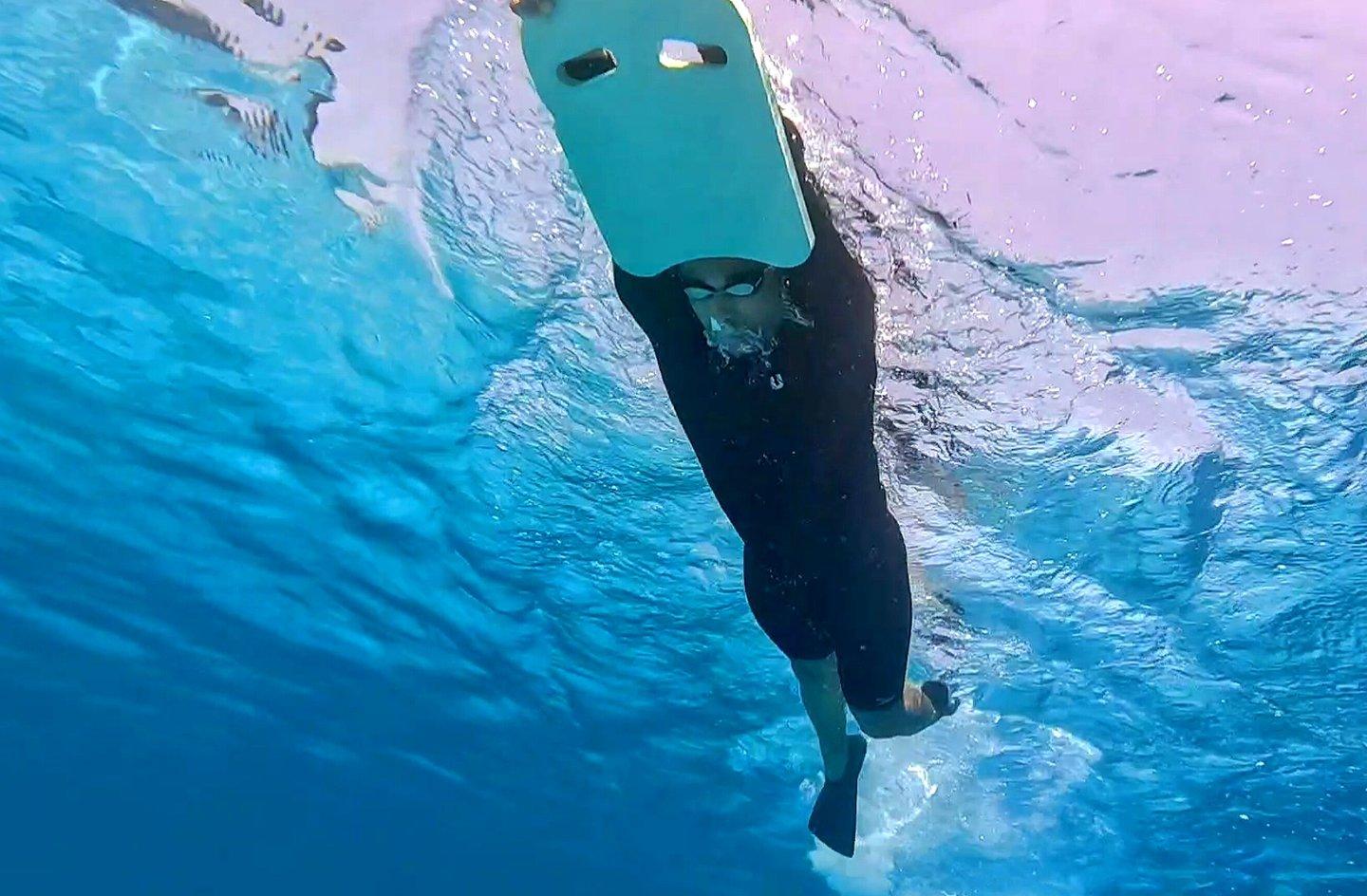
Stroke improvement coaching is designed for active swimmers who experience exhaustion after one or two laps, suffer shoulder discomfort, or battle sinking hips. We deconstruct and rebuild your stroke mechanics—prioritizing head alignment, hip rotation, early vertical forearm catch, and low-drag propulsion.
Rather than overwhelming you with 20 cues at once, we isolate and repair one biomechanical lever at a time: alignment first, catch second, breathing third, and propulsion rhythm fourth.
Eliminating drag by aligning head, spine, and pelvis; establishing the neutral horizontal axis.
Developing the Early Vertical Forearm (EVF) to convert arm movement into forward propulsion rather than downward press.
Integrating rhythmic breathing on both sides without breaking streamline or dropping the leading arm.
Matching Distance Per Stroke (DPS) with an efficient stroke cadence for sustained, repeatable aerobic swimming.
When technique improves, heart rate decreases and distance-per-stroke expands dramatically.
Every session combines on-deck video feedback analysis, targeted corrective drill sets (15–20m segments), and continuous lap application with stroke counting.
Pull buoy, short-blade silicone training fins, swim paddles (size small/medium), and standard training goggles.
1:1 personal technical session or focused clinics of maximum 4 swimmers per lane.
All in-person coaching programs, stroke video diagnostics, and beginner water-adaptation sessions take place at Swimming By Sanuj Pool in Manas Nagar, Ayodhya.
Equipped with 3 dedicated training lanes, graduated 3.5ft to 6ft depth profile, and continuous sanitized water filtration to ensure safety for both non-swimmers and technique development.
Complete clarity on session frequency, lane reservations, and technical diagnostics.
A triathlete learner credits Coach Sanuj’s freestyle stroke correction, breathing rhythm calibration, and open water sighting instruction with helping him conquer the 1.9 km swim cut-off and achieve his Ironman 70.3 medal.
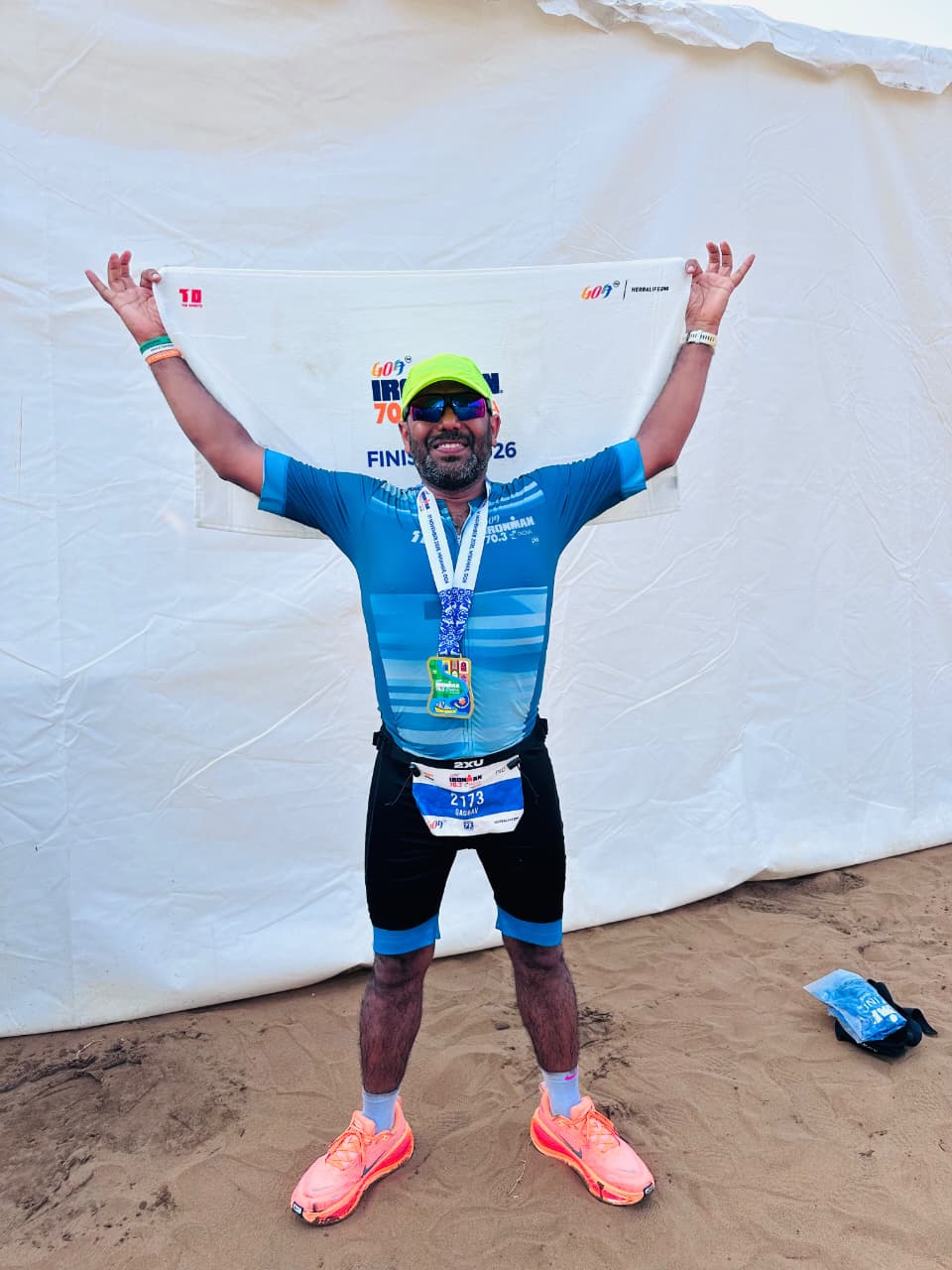
“Thank you Coach Sanuj for your freestyle stroke instruction and breathing guidance. It made all the difference in staying calm and efficient across the entire open water swim.”
Preparing for an Ironman 70.3 event requires more than just pool laps—it requires swimming without heart-rate spikes in crowded open water. The student approached Sanuj with heavy leg sink and shoulder fatigue within 400 meters.
Over an intensive technique coaching block, Sanuj lowered the swimmer’s head position, restructured their bilateral breathing rotation, and eliminated a wide scissor kick that was wasting leg glycogen.
Direct, practical answers to common questions about coaching, scheduling, and technique.
In 90% of cases, sinking legs are caused by a high head position. Lifting the head just two inches pushes the hips and legs down into the water like a seesaw. By lowering your head so water washes over your crown, your hips naturally rise to the surface.
Most swimmers feel immediate relief in effort within 2 to 3 sessions once head position and breathing rotation are corrected. Solidifying motor memory typically takes 4 to 6 weeks of deliberate drill practice.
Yes. While freestyle is the most popular, we offer specialized clinics for backstroke (shoulder rotation and steady head), breaststroke (timing of kick and glide), and butterfly (undulation rhythm).
Submit an online enquiry. Tell Coach Sanuj about your current swim distance, where you feel fatigue or strain, and receive a personalized coaching pathway recommendation.
Includes 45 minutes of in-water observation and filmed underwater breakdown to pinpoint exact drag sources.
Book Diagnostic Slot